
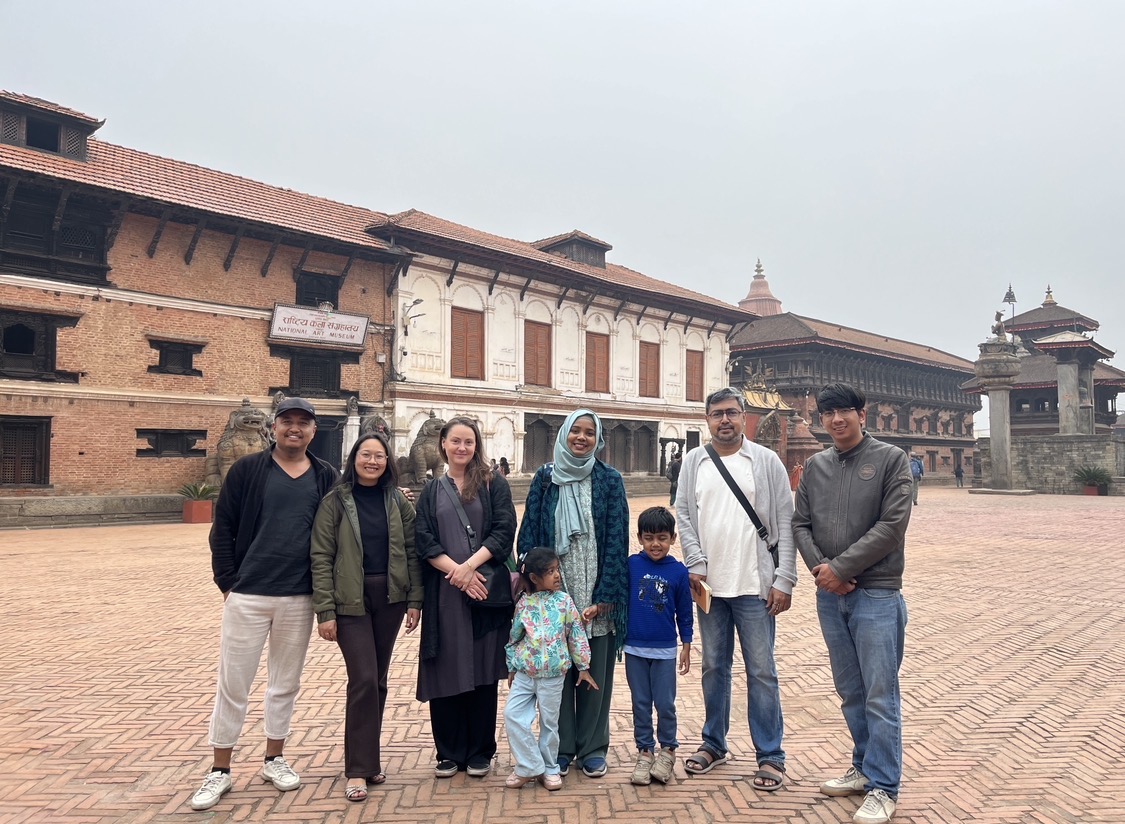
For artists participating in the Artudio International Artist Residency (AIAR), creative research extends far beyond the studio. The residency experience is designed to immerse international artists in the cultural landscapes of Nepal, enabling them to engage directly with history, craft traditions, and living communities.
One of the most meaningful cultural excursions organized by Artudio is the residency tour to Bhaktapur—a historic city where centuries-old artistic traditions continue to shape everyday life. For visiting artists, this journey becomes a powerful encounter with Nepal’s living heritage and an important source of inspiration within their residency research.
Recently, the tour was experienced by current AIAR resident artists Liisi Tamm from Estonia (February–March residency) and Bangladeshi artist duo Shamim Ahmed Chowdhury and Lamia Azad from Bangladesh, who joined the residency in March. Their visit to Bhaktapur became a significant moment of cultural exploration and artistic reflection during their time in Nepal.

Bhaktapur: A Living Museum of Newar Art and Architecture
Located in the historic Kathmandu Valley, Bhaktapur is one of Nepal’s most culturally preserved cities and forms a vital part of the Kathmandu Valley World Heritage Site, recognized by UNESCO.

Often referred to as the “City of Devotees,” Bhaktapur is renowned for its extraordinary concentration of temples, traditional brick houses, intricately carved wooden windows, and centuries-old courtyards. The city’s architecture reflects the refined aesthetic philosophy of the Newar civilization, where spirituality, craftsmanship, and urban design are deeply interconnected.
For international artists, Bhaktapur offers a rare experience: a place where art is embedded in everyday life, community rituals, and living traditions.

AIAR Residency Tour: Experiencing Cultural Landscapes
As part of the residency program, Artudio organizes guided visits to Bhaktapur that allow resident artists to encounter Nepal’s historic artistic ecosystems firsthand. These tours serve as site-based research experiences, where artists can explore architecture, public spaces, craft traditions, and cultural symbolism.
During the visit, artists explored several of Bhaktapur’s most important cultural landmarks.
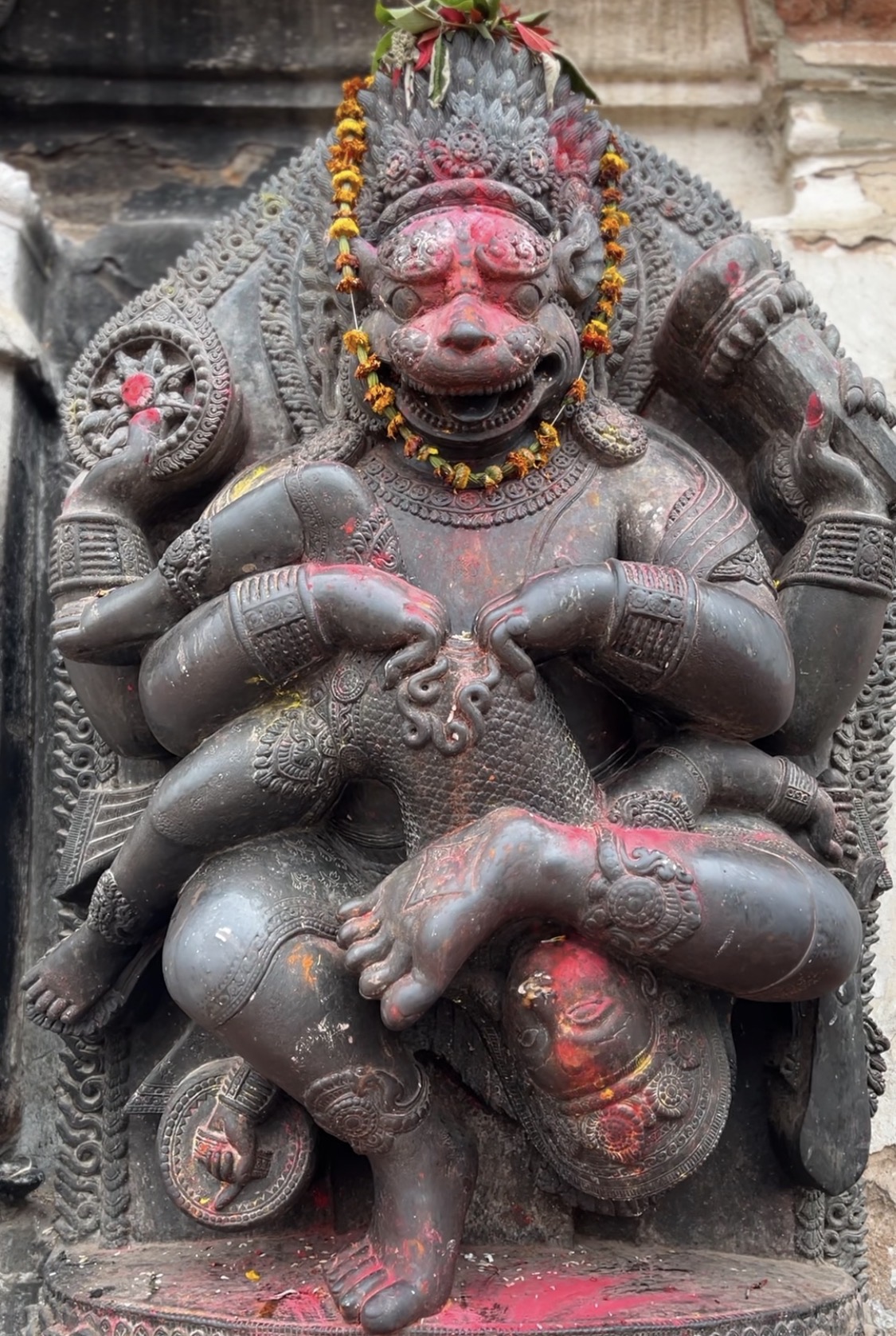
Bhaktapur Durbar Square
At the heart of the city lies Bhaktapur Durbar Square, the historic palace complex of the Malla kings. The square is surrounded by monumental temples, courtyards, and traditional structures that demonstrate the remarkable achievements of Newar architecture and craftsmanship.
Among its most celebrated features is the ornate Golden Gate, widely considered one of the finest examples of metal craftsmanship in the Kathmandu Valley. The gate, built during the reign of King Ranjit Malla, is richly decorated with mythological figures and intricate repoussé metalwork.
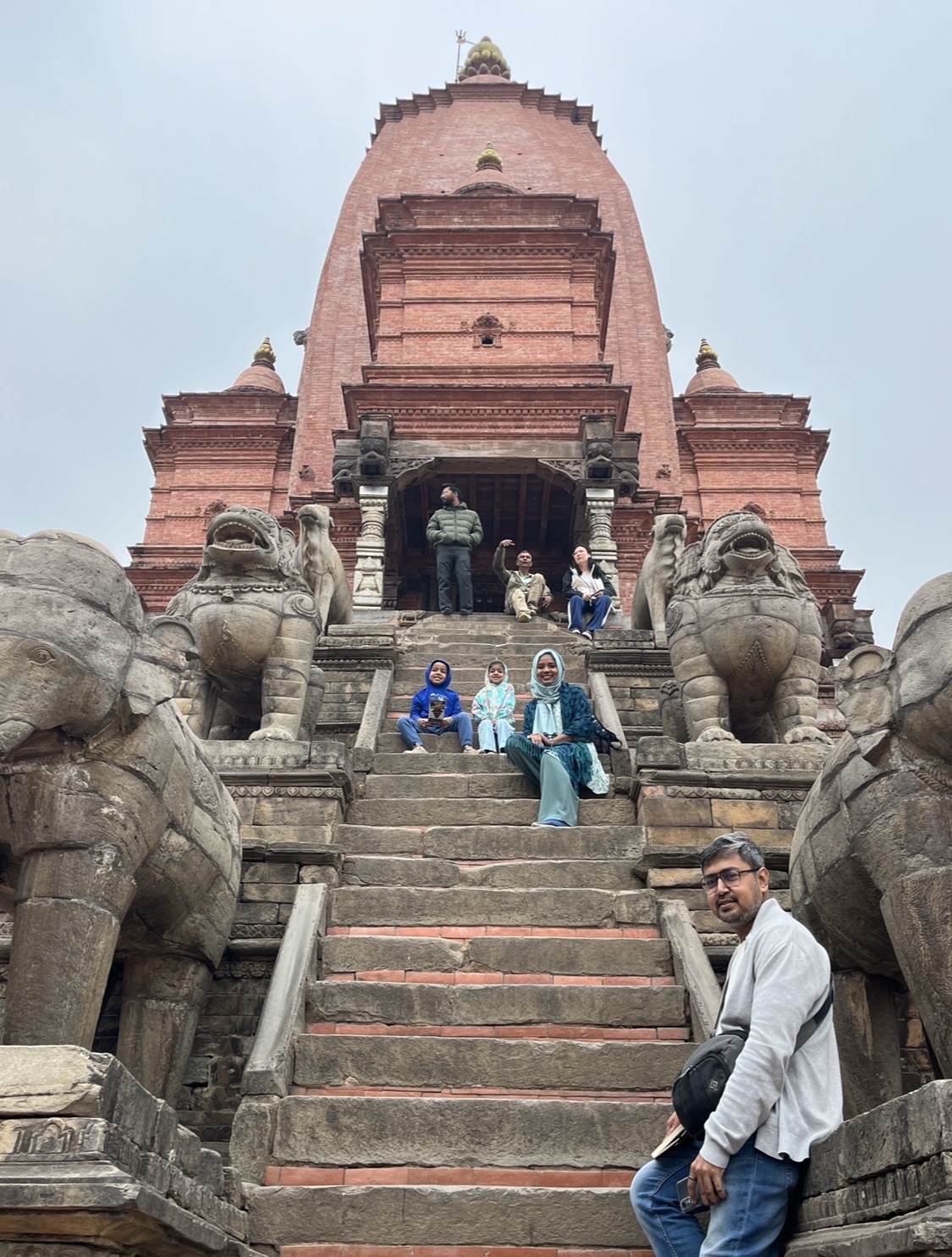
Nyatapola Temple
The residents also visited the majestic Nyatapola Temple, a five-tiered pagoda constructed in 1702. Rising above Taumadhi Square, it is the tallest temple in Nepal and a striking symbol of traditional Nepali architectural ingenuity.
Dattatraya Square
Another key location in the tour was Dattatraya Square, one of the oldest cultural quarters of Bhaktapur. The square is home to the revered Dattatraya Temple, believed to have been built using the timber from a single tree. The surrounding courtyards, monasteries, and artisan workshops reflect the deep integration of spirituality, craftsmanship, and community life in Newar culture.
Pottery Square
The artists also explored Bhaktapur Pottery Square, where generations of potters continue to produce clay vessels using traditional methods. Rows of sun-drying pottery and spinning wheels create a dynamic environment where craftsmanship remains a vital part of daily life.
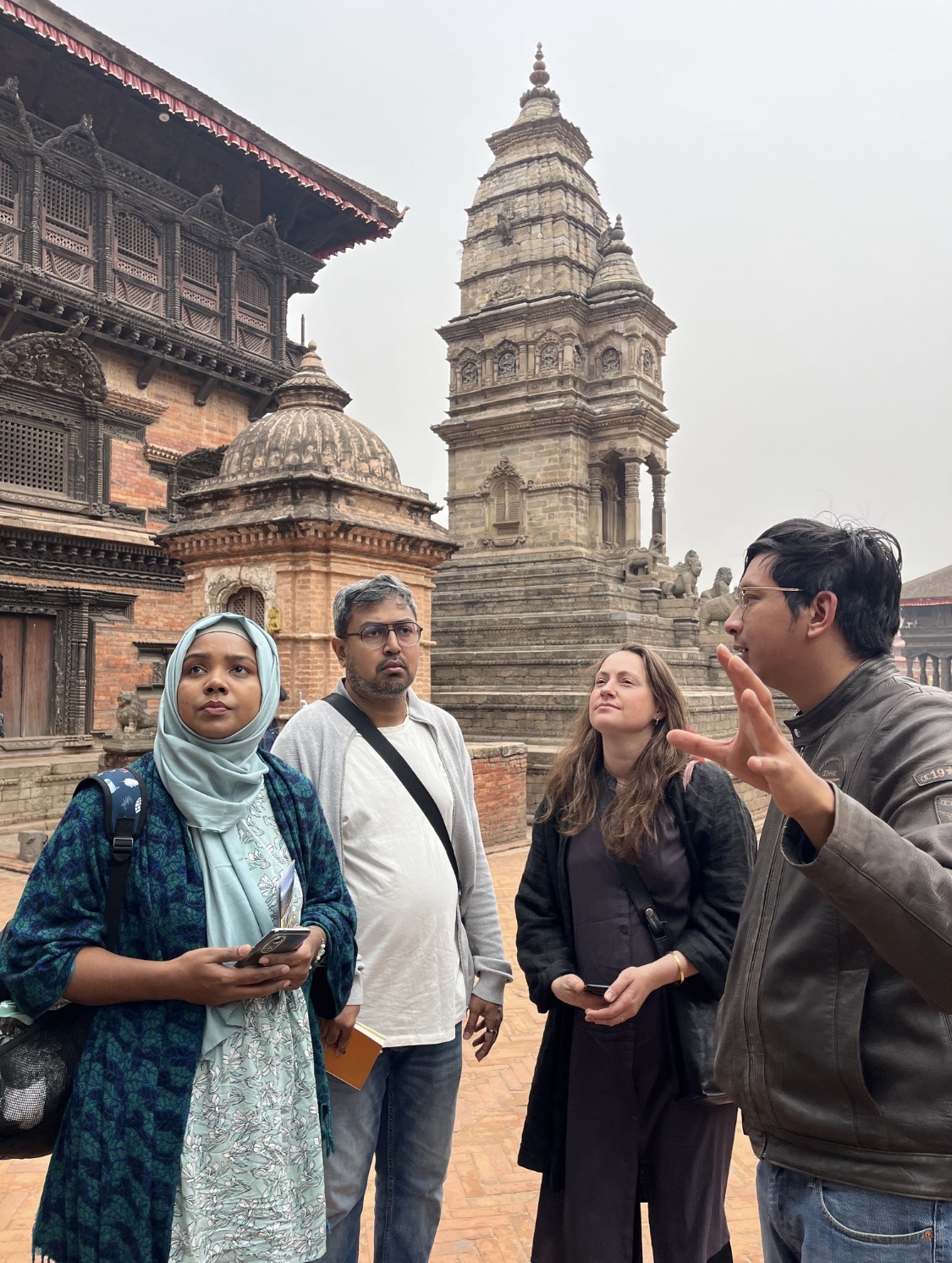
Guided Cultural Insight with Ram Narayan Prajapati
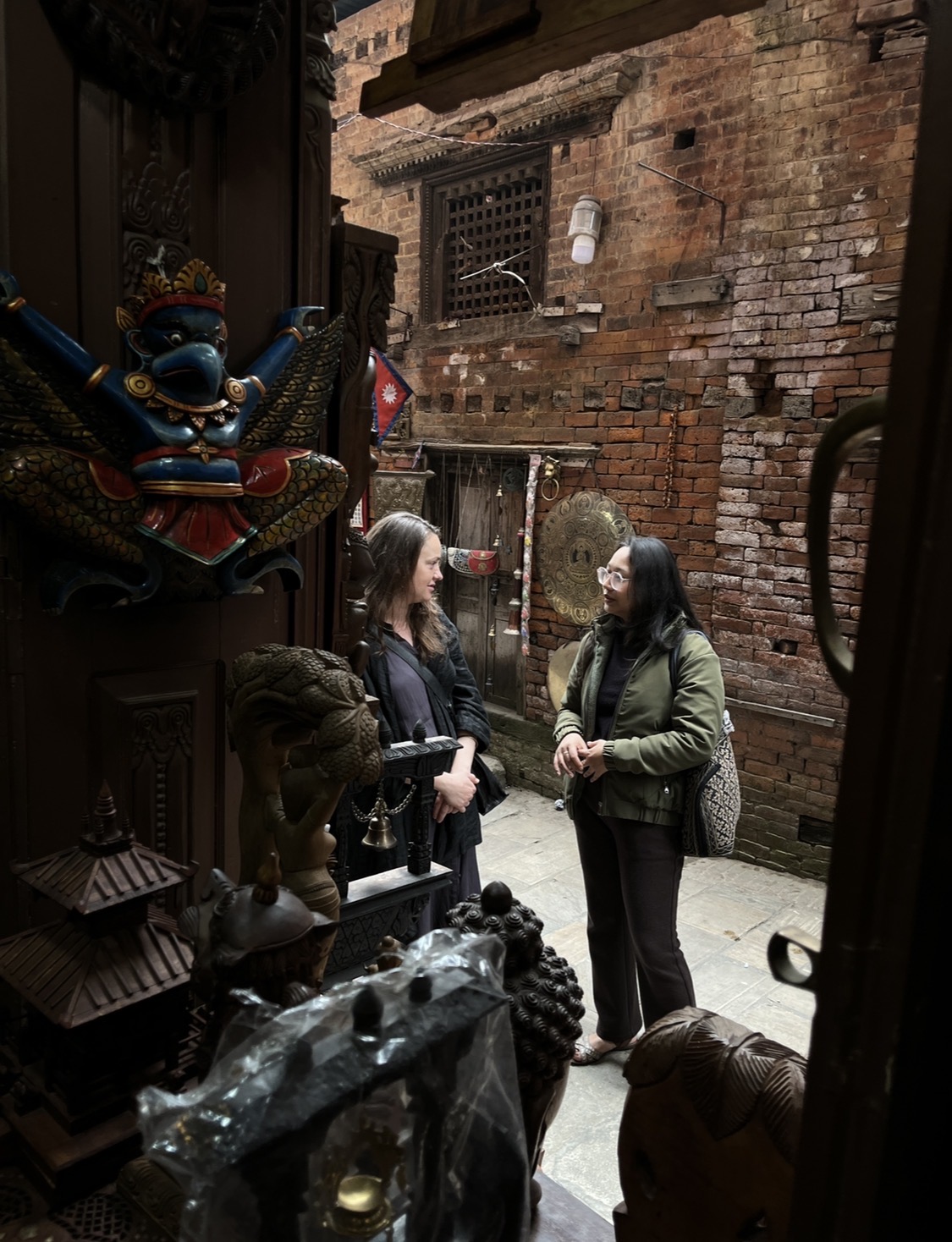
A special highlight of the visit was the guided tour led by Ram Narayan Prajapati, owner and founder of the renowned Peacock Shop and a prominent collector of traditional Nepali art.
Through his deep knowledge of Bhaktapur’s cultural heritage, Prajapati introduced the resident artists to the symbolism, craftsmanship, and historical narratives embedded within traditional artifacts and architecture. His personal collection and long-standing engagement with traditional art provided residents with rare insights into the material culture of the Kathmandu Valley.

For artists like Liisi Tamm and the Bangladeshi duo Shamim Ahmed Chowdhury and Lamia Azad, this guided encounter created a meaningful bridge between contemporary artistic practice and traditional cultural knowledge.
Traditional Craft as Contemporary Inspiration
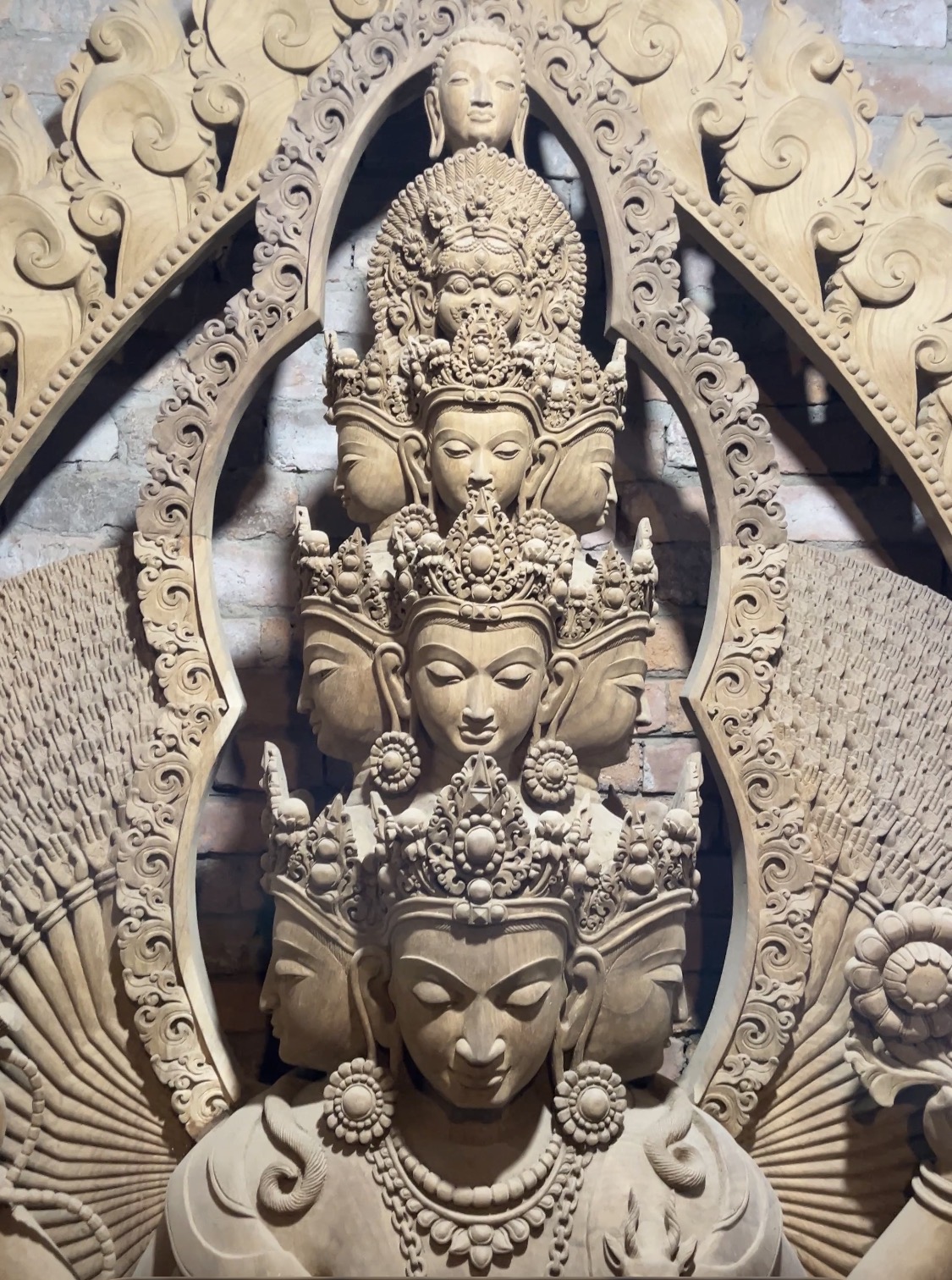
One of the most striking aspects of Bhaktapur for visiting artists is the continuity of craft traditions. Woodcarvers, metalworkers, potters, and painters continue to practice skills that have been passed down across generations.
For many contemporary artists, this experience challenges the conventional separation between fine art, craft, and heritage. Instead, Bhaktapur demonstrates how creativity can function as a living cultural practice embedded within community life.
These encounters often influence the conceptual direction of artists’ work during their residency at Artudio.
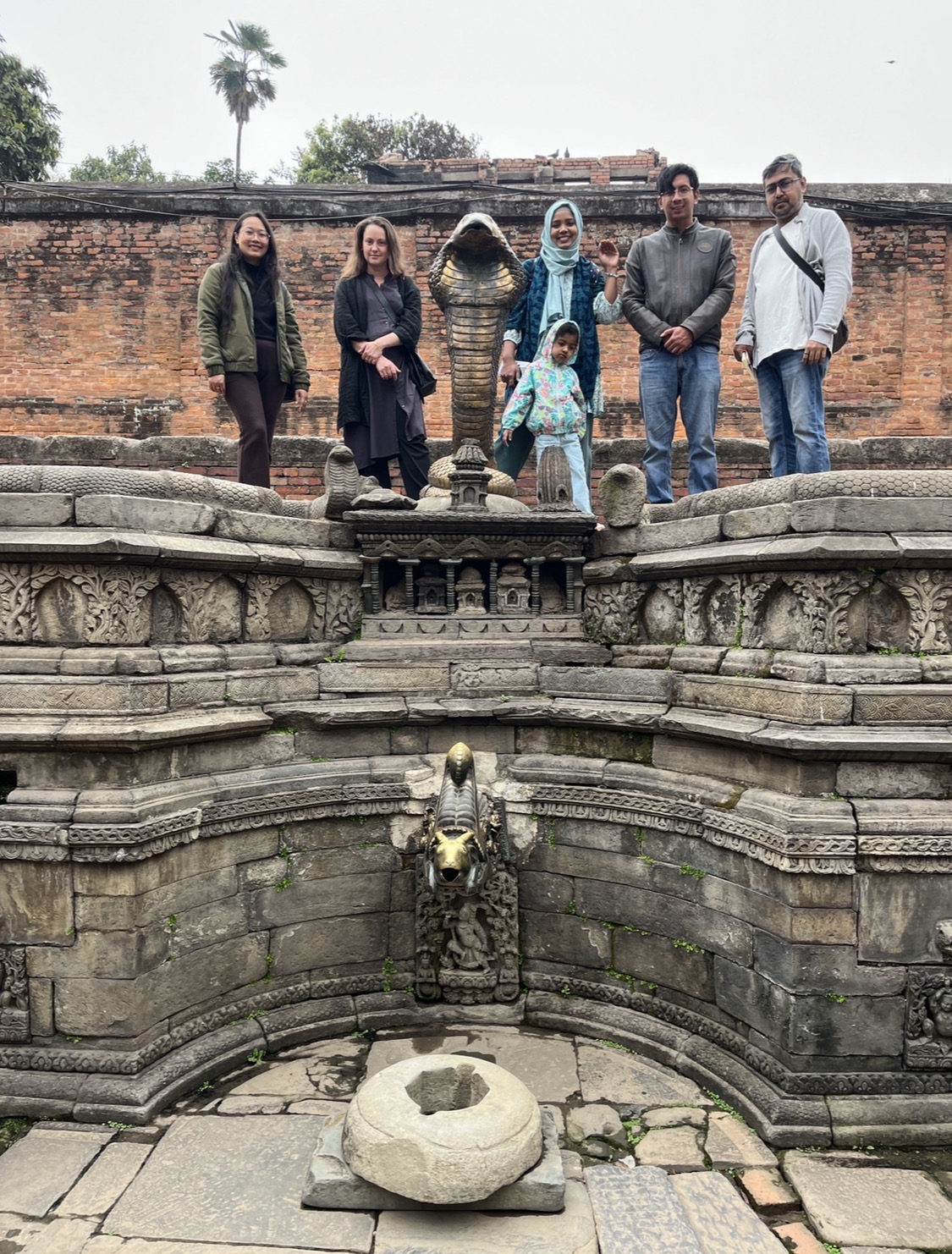
The most famous water spouts (Hitis) in Bhaktapur are the golden spout at Nag Pokhari (within the 55-Window Palace courtyard) and the intricately carved Layaku Hiti in Durbar Square. These 17th-century, ornate stone and metal conduits, often featuring makara (mythical crocodile) spouts, were used by royalty for ritual bathing and water supply.
Cultural Exchange at the Core of AIAR
The Artudio International Artist Residency seeks to create meaningful exchanges between international artists and Nepal’s rich cultural landscape. Cultural visits such as the Bhaktapur tour help residents understand the historical and social contexts that shape artistic traditions in the region.
Through these experiences, artists gain:
- deeper understanding of Nepal’s architectural and artistic heritage
- insight into Newar craft traditions and symbolism
- opportunities for dialogue with cultural practitioners and collectors
- inspiration for site-responsive artistic research
For Liisi Tamm and the Bangladeshi artist duo Shamim Ahmed Chowdhury and Lamia Azad, the visit to Bhaktapur became one of the most memorable moments of their residency journey.
Artudio’s Vision
Through initiatives like the Artudio International Artist Residency, Artudio continues to position Nepal as a vibrant hub for international artistic research, cultural exchange, and creative collaboration.
By connecting artists with historic cultural environments such as Bhaktapur—and with cultural knowledge keepers like Ram Narayan Prajapati—the residency program fosters meaningful encounters between heritage and contemporary art practice.
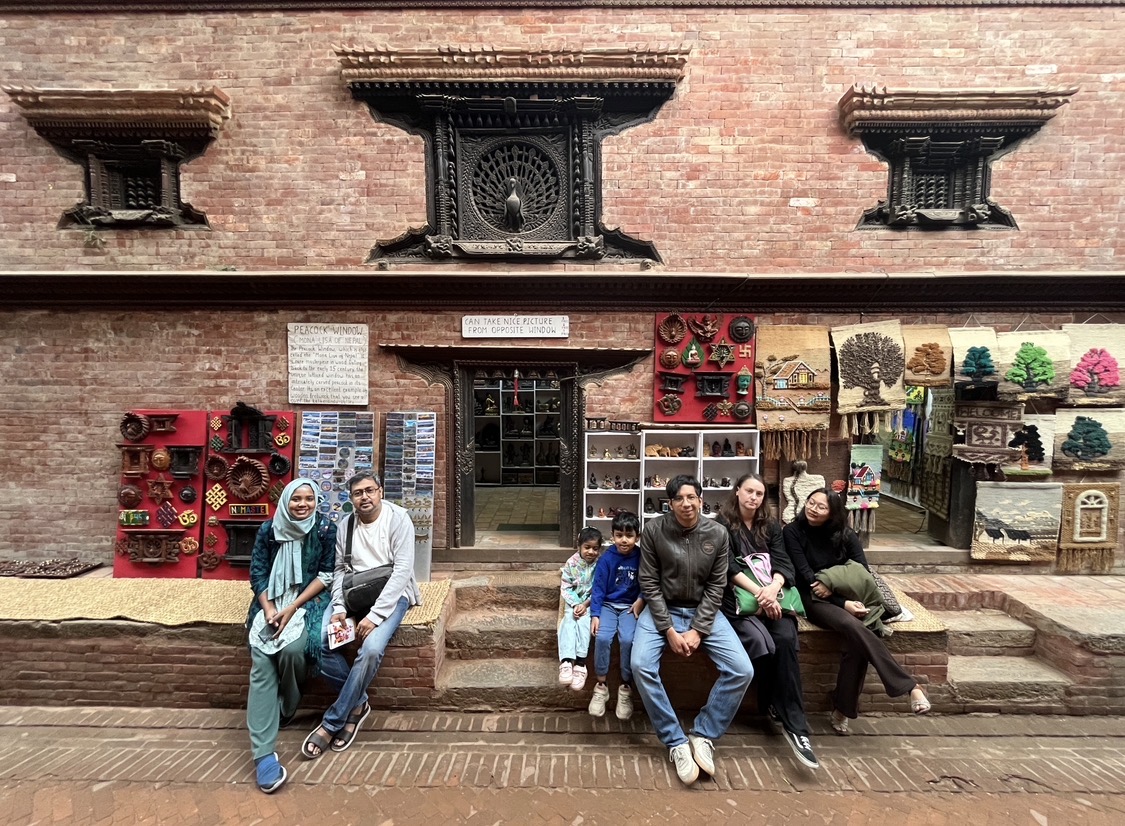
In Bhaktapur, artists discover that history is not only preserved in monuments—it lives in architecture, rituals, craftsmanship, and the communities that sustain them.
And within this living landscape, new artistic ideas begin to emerge.